DR-ORP1 -- Oxidation-Reduction Potential Sensor
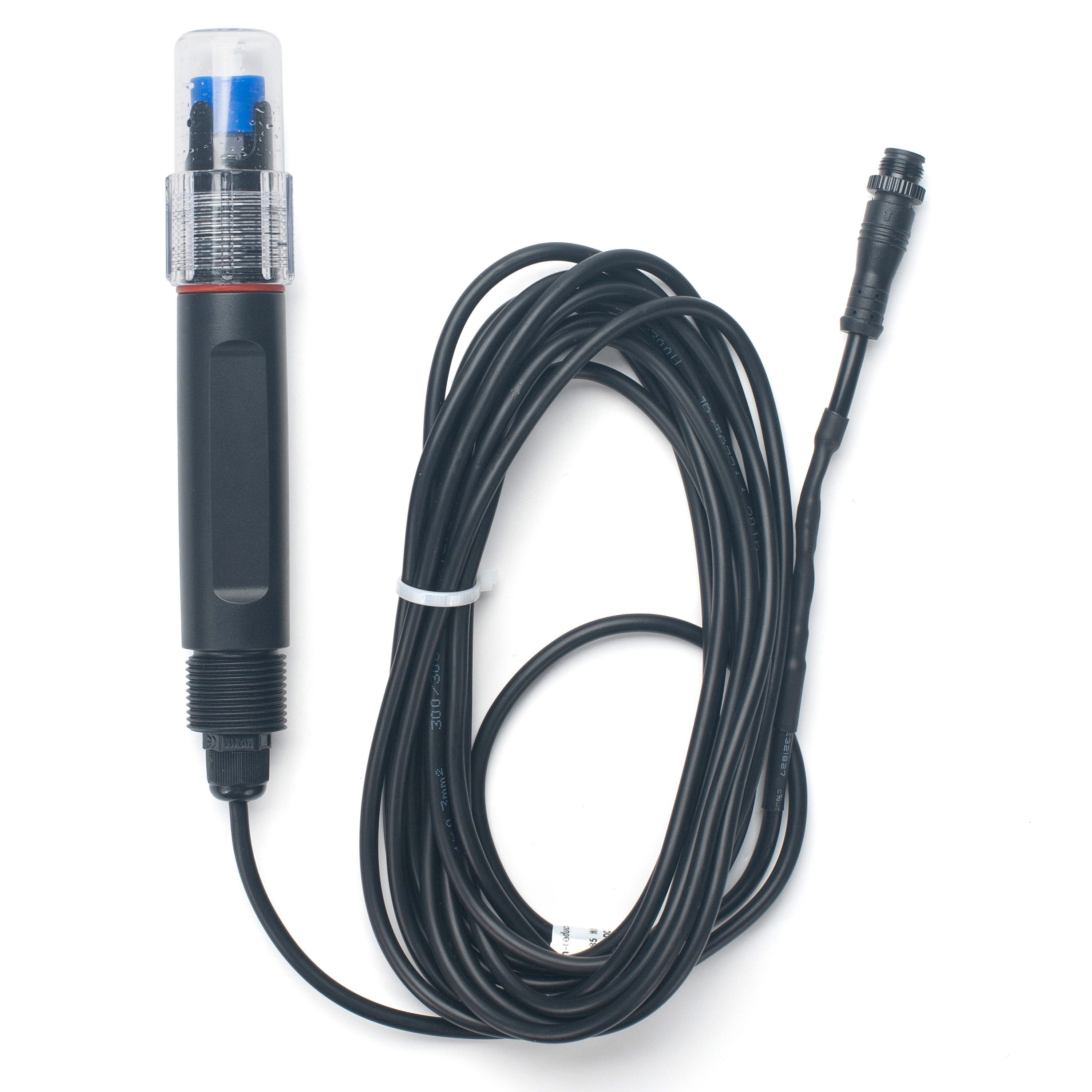
1. Introduction
1.1 Specification
-
Power Input: DC7~30V
-
Measuring range:-1999~1999mV
-
Resolution: 1mV
-
Interface: RS485. 9600 Baud Rate
-
Measurement error: ±3mV
-
Stability: ≤2mv/24 hours
-
Working environment:
- Ambient Temperature: 0--60°C
- Relative Humidity: <85% RH(Specifically refers to the cable male and female)
-
IP Rated: IP68
-
Max Pressure: 0.6MPa
-
Wire length: 5 meters
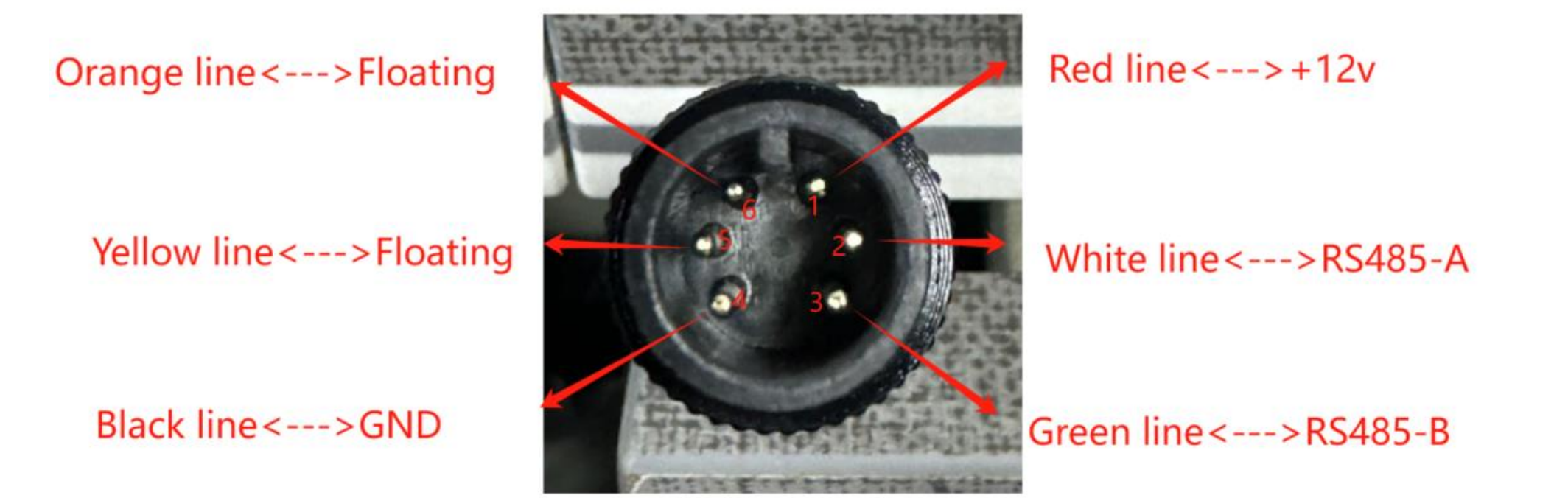
1.2 Wiring
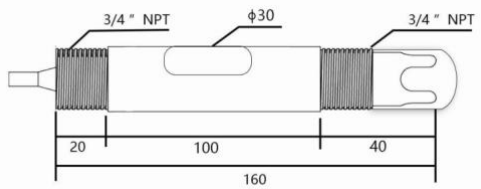
1.3 Mechinical Drawing
1.4 Installation Notice
Do not power on while connect the cables. Double check the wiring before power on.
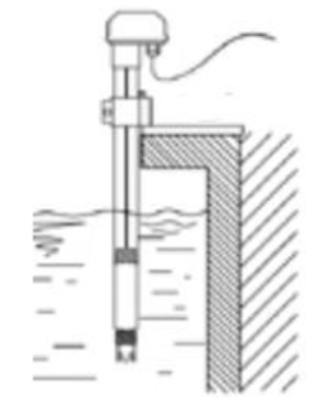
Installation Photo as reference: Submerged installation:
The lead wire of the equipment passes through the waterproof pipe, and the 3/4 thread on the top of the equipment is connected to the 3/4 thread of the waterproof pipe with raw tape. Ensure that the top of the equipment and the equipment wire are not flooded.
Pipeline installation:
Connect the equipment to the pipeline through the 3/4 thread.
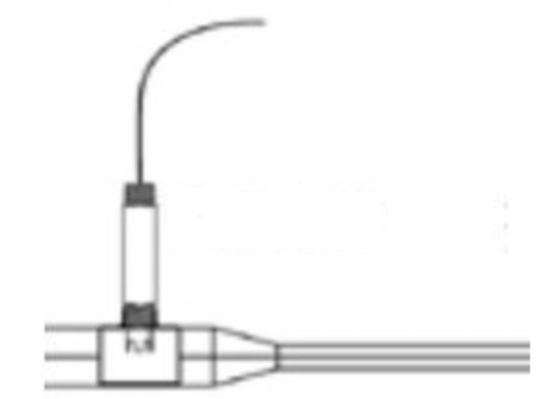
1.5 Maintenance
(1) The equipment itself generally does not require daily maintenance. When an obvious fault occurs, please do not open it and repair it yourself, and contact us as soon as possible.
(2) In general, ORP electrodes do not need to be calibrated and can be used directly. When there is doubt about the quality and test results of the ORP electrode, the electrode potential can be checked with an ORP standard solution to determine whether the ORP electrode meets the measurement requirements, and the electrode can be recalibrated or replaced with a new ORP electrode. The frequency of calibration or inspection of the measuring electrode depends on different application conditions (the degree of dirt in the application, the deposition of chemical substances, etc.).
(3) There is an appropriate soaking solution in the protective bottle at the front end of the electrode, and the electrode head is soaked in it to ensure the activation of the platinum sheet and the liquid junction. When measuring, loosen the bottle cap, pull out the electrode, and rinse it with pure water before use.
(4) Preparation of electrode soaking solution: Take 25 grams of analytical pure potassium chloride and dissolve it in 100 ml of pure water to prepare a 3.3M potassium chloride solution.
(5) Before measuring, the bubbles in the electrode glass bulb should be shaken off, otherwise it will affect the measurement. When measuring, the electrode should be stirred in the measured solution and then placed still to accelerate the response.
(6) The electrode should be cleaned with deionized water before and after the measurement to ensure the measurement accuracy.
(7) After long-term use, the ORP electrode will be passivated, which is manifested as a decrease in sensitivity gradient, slow response, and inaccurate readings. At this time, the platinum sheet at the bottom of the electrode can be soaked in 0.1M dilute hydrochloric acid for 24 hours (0.1M dilute hydrochloric acid preparation: 9 ml of hydrochloric acid is diluted to 1000 ml with distilled water), and then soaked in 3.3M potassium chloride solution for 24 hours to restore its performance.
(8) Electrode contamination or liquid junction blockage can also cause electrode passivation. At this time, it should be cleaned with an appropriate solution according to the nature of the contaminant. If the platinum of the electrode is severely contaminated and an oxide film is formed, toothpaste can be applied to the platinum surface and then gently scrubbed to restore the platinum's luster.
(9) The equipment should be calibrated before each use. It is recommended to calibrate once every 3 months for long-term use. The calibration frequency should be adjusted appropriately according to different application conditions (degree of dirt in the application, deposition of chemical substances, etc.). After aging, the electrodes should be replaced in time.
1.6 RS485 Commands
RS485 signaldefault address 0x13 Standard Modbus-RTU protocol, baud rate: 9600; check bit: none; data bit: 8; stop bit: 1
1.6.1 Query address
send:
| Original address | Function code | Address high | Address low | Quantity high | Quantity low | CRC16 low | CRC16 high |
|---|---|---|---|---|---|---|---|
| 0XFE | 0X03 | 0X00 | 0X50 | 0X00 | 0X00 | 0X51 | 0XD4 |
response:
| New address | Function code | Data length | CRC16 low | CRC16 high |
|---|---|---|---|---|
| 0X01 | 0X03 | 0X00 | 0X20 | 0XF0 |
1.6.2 Change address
For example: Change the address of the sensor with address 1 to 2, master → slave
| Original address | Function code | Address high | Address low | Quantity high | Quantity low | CRC16 low | CRC16 high |
|---|---|---|---|---|---|---|---|
| 0X01 | 0X06 | 0X00 | 0X50 | 0X00 | 0X02 | 0X08 | 0X1A |
If the sensor receives correctly, the data is returned along the original path.
Note: If you forget the original address of the sensor, you can use the broadcast address 0XFE instead. When using 0XFE, the host can only connect to one slave, and the return address is still the original address, which can be used as a method of address query.
1.6.3 Modify intercept
send:
| Address | Function code | Starting register address high | Starting register address low | Register Length high | Register Length low | CRC16 low | CRC16 high |
|---|---|---|---|---|---|---|---|
| 0X13 | 0X06 | 0X00 | 0X10 | 0X00 | 0X64 | 0X8A | 0X96 |
Change the intercept of the sensor with address 1 to 10 (default 0), which is 0X000A in the command.
response:
| Address | Function code | Address high | Address low | Quantity high | Quantity low | CRC16 low | CRC16 high |
|---|---|---|---|---|---|---|---|
| 0X13 | 0X06 | 0X00 | 0X10 | 0X00 | 0X64 | 0X8A | 0X96 |
1.6.4 Query data
Query the data (ORP) of the sensor (address 13), host → slave
| Address | Function code | Starting register address high | Starting register address low | Register length high | Register length low | CRC16 low | CRC16 high |
|---|---|---|---|---|---|---|---|
| 0X13 | 0X03 | 0X00 | 0X00 | 0X00 | 0X01 | 0X87 | 0X78 |
If the sensor receives correctly, the following data will be returned, slave → host
| Address | Function code | Data length | Register 0 Data high | Register 0 Data low | CRC16 low | CRC16 high |
|---|---|---|---|---|---|---|
| 0X13 | 0X03 | 0X02 | 0X02 | 0XAE | 0X80 | 0X9B |
The query data command is 13 03 00 00 00 01 87 78
For example, the returned data is 13 03 02 02 AE 80 9B.
02 AE is the ORP value, converted to decimal, the actual value is 686, 02 AE means the current ORP value is 686mV
1.6.5 Calibration Method
This device uses two-point calibration, and two known ORP standard solutions need to be prepared. The calibration steps are as follows: (1) Place the electrode in distilled water to clean it, and then place it in 86mV standard buffer solution. After the data stabilizes, enter the following calibration command, and the 86mV point calibration is completed;
| Address | Function code | Address high | Address low | Quantity high | Quantity low | CRC16 low | CRC16 high |
|---|---|---|---|---|---|---|---|
| 0X13 | 0X06 | 0X00 | 0X24 | 0XFF | 0XFF | 0XCB | 0X03 |
Wash the electrode in distilled water and place it in 256mV standard buffer. After the data is stable, enter the following calibration command to complete the 256mV point calibration.
| Address | Function code | Address high | Address low | Quantity high | Quantity low | CRC16 low | CRC16 high |
|---|---|---|---|---|---|---|---|
| 0X13 | 0X06 | 0X00 | 0X25 | 0XFF | 0XFF | 0X9A | 0XC3 |