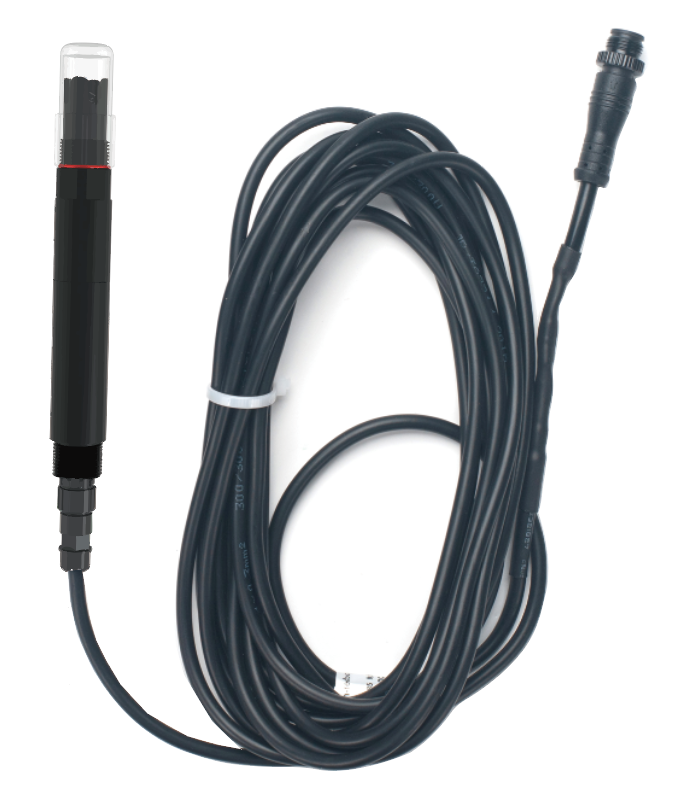
DR-CL-2ML, DR-CL-10ML -- Integrated Residual Chlorine Sensor
1. Introduction
DR-CL is a device for measuring the residual chlorine concentration (hypochlorous acid, hypochlorite ion concentration) in water.
1.1 Specification:
-
Power Input: DC7~30V
-
Power Consumption : 0.19W
-
Interface: RS485. 9600 Baud Rate
-
CL Range & Resolution:
- CL2ML: 0-2mg/L
- CL10ML: 0-10mg/L
- Resolution: 0.01mg/L
-
CL Accuracy: ±5% FS
-
Working environment:
- Ambient Temperature: 0--50°C
- pH:4-9
- Flow rate: 30L/h~60L/h (flow tank installation)
-
IP Rated: IP68
-
Max Pressure: 0.6MPa
-
Wire length: 5 meters
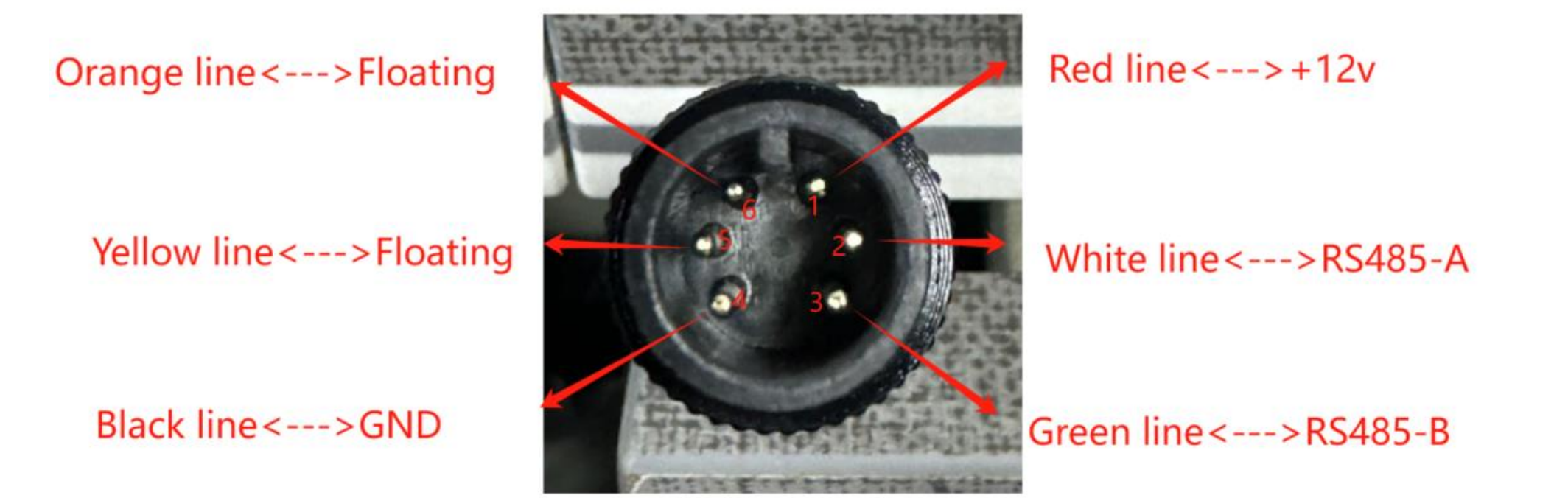
1.2 Wiring
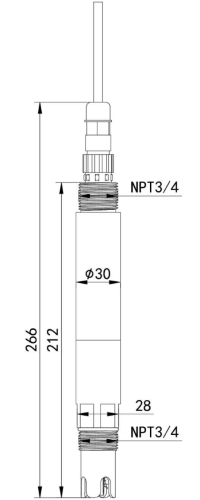
1.3 Mechinical Drawing
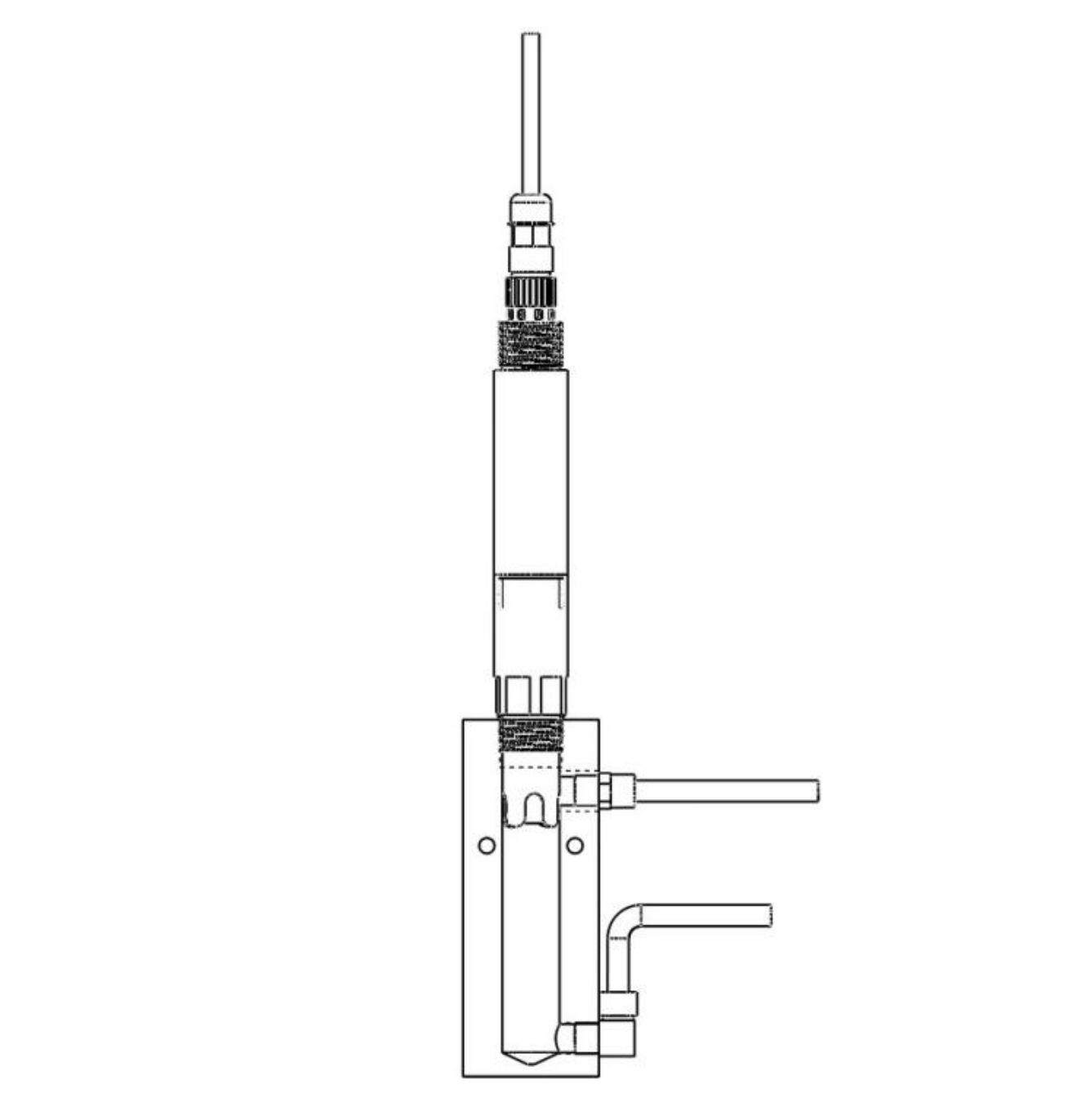
1.4 Installation
Flow-through installation: Use the matching flow slot for installation. The device and the flow slot are installed tightly.
The measuring end is completely immersed in the measured liquid to ensure a steady flow rate without bubbles.
It is recommended that the flow rate be controlled at 30-60Lh to ensure the accuracy of the test.
1.5 Maintenance
- The device itself generally does not require daily maintenance. When an obvious fault occurs, please do not open it and repair it yourself, and contact us as soon as possible!
- After using the electrode, please clean the electrode head with clean water and cover it with a protective cover.
- When measuring the device, the measured liquid should flow and the flow rate should be uniform, and there should be no bubbles attached to the measuring end of the device.
- If the electrode diaphragm is attached with dirt and mineral components, the sensitivity will be reduced, and it may not be possible to perform sufficient measurement. Please ensure that the platinum ring is clean.
- The platinum induction ring of a good residual chlorine electrode should always be kept clean and bright. If the platinum ring of the electrode becomes rough or covered with pollutants after measurement, please clean it according to the following method: (For reference) Inorganic pollution: immerse the electrode in 0.1mol/L dilute hydrochloric acid for 15 minutes, gently wipe the platinum ring of the residual chlorine electrode with a cotton swab, and then wash it with tap water.
- Organic or oil pollution: immerse the electrode in tap water with a small amount of detergent, such as dishwashing liquid, and thoroughly clean the sensing surface of the electrode sensor. Gently wipe the platinum ring of the electrode with a cotton swab, then rinse with tap water, and the cleaning is complete. If the platinum ring of the electrode has formed an oxide film, please use toothpaste or 1000-grit fine sandpaper to properly polish the sensing surface, and then clean it with tap water. The platinum ring is connected to the glass, so please handle it carefully when polishing. The electrode has a service life of about one year, and a new electrode should be replaced in time after aging.
- Before the cable plug and the device plug are locked, do not put the plug part into water.
1.6 RS485 Commands
RS485 signal Standard Modbus-RTU protocol, baud rate: 9600; check bit: none; data bit: 8; stop bit: 1
1.7 Query data
Example 1: Read the current residual chlorine concentration of the device with address 01
| Address | Function code | Register Address | Register length | CRC16 low | CRC16 high |
|---|---|---|---|---|---|
| 0X01 | 0X03 | 0X00 0X00 | 0X00 0X01 | 0X84 | 0X0A |
response:
| Address | Function code | Valid Bytes | Register contents | CRC16 low | CRC16 high |
|---|---|---|---|---|---|
| 0X01 | 0X03 | 0X02 | 0X03 0X16 | 0X39 | 0X7A |
Calculation of residual chlorine concentration: 316H (hexadecimal) = 790 => residual chlorine = 7.90
Example 2: Set the deviation value for the current residual chlorine value of the device with address 01 to correct the value and send the frame: (If the current residual gas value output by the device is 7.90, the value needs to be corrected to 8.00, the difference is 8.00-7.90-0.100.1*100=10=>41200000 (floating point number), write 41200000 to the contents of the two registers)
| Original address | Function code | Register address | Register number | Byte number | Register content | CRC16 low | CRC16 high |
|---|---|---|---|---|---|---|---|
| 0X01 | 0X10 | 0X01 0X12 | 0X00 0X02 | 0X04 | 0X4120 0X0000 | 0X08 | 0X1A |
response:
| Address | Function code | Register address | Register number | CRC16 low | CRC16 high |
|---|---|---|---|---|---|
| 0X01 | 0X10 | 0X01 0X12 | 0X00 0X02 | 0XE5 | 0X0D |